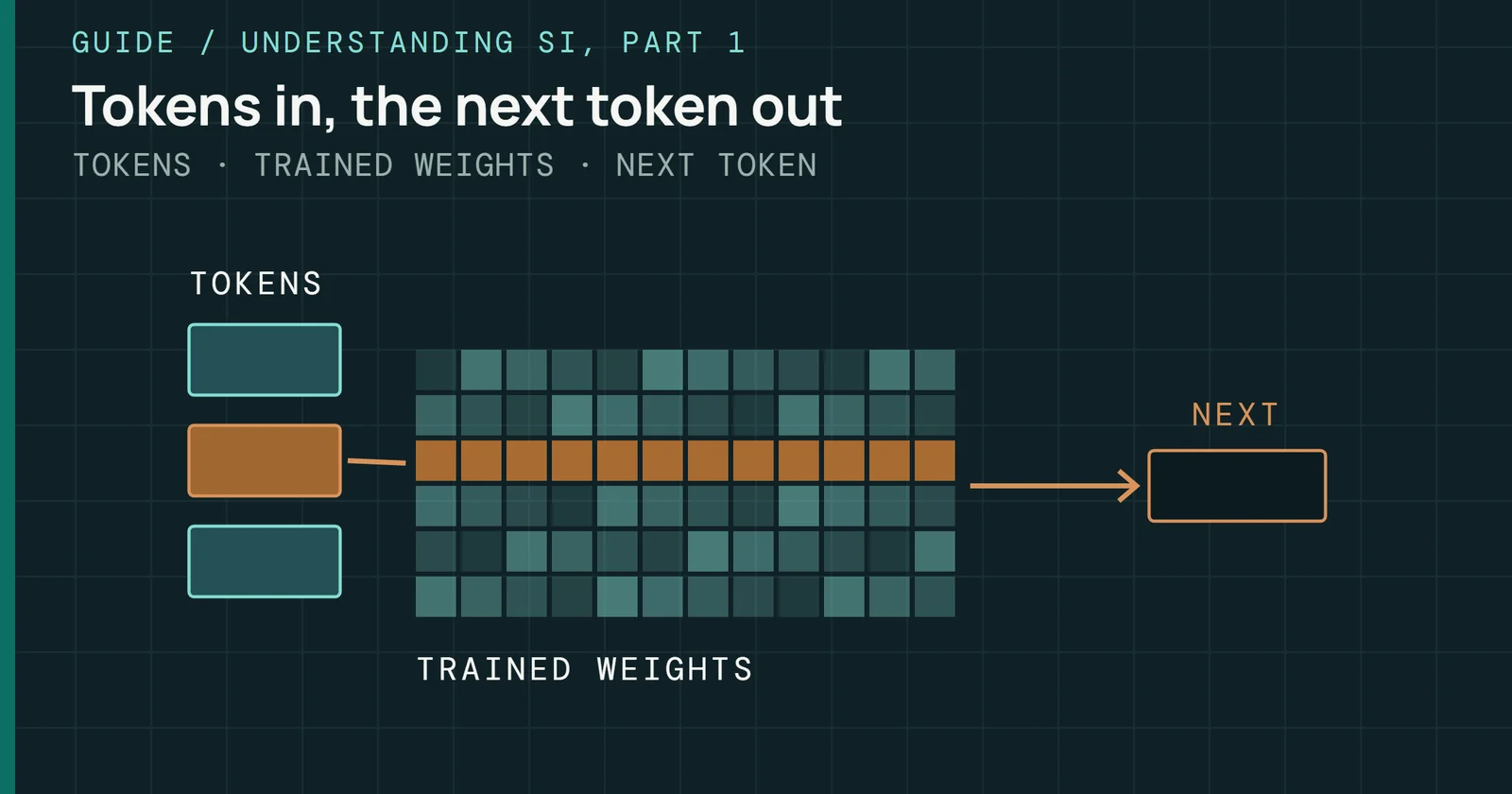
Part 1 · What a model knows
How Does SI Actually Know Anything?
What a language model’s knowledge is: tokens, weights, attention, and next-token training, what researchers see inside, and why memory bandwidth sets the speed.
Read the guideGuides
What a language model knows, and the agents that put one to work on a computer of its own.
These guides are about SI itself rather than the memory under it. The first explains what a language model knows: tokens, weights, attention and next-token training, and why memory bandwidth sets how fast it answers. The second ranks the SI agents that work on computers of their own and looks at the memory and storage those computers keep. Read them in order, or start with the one that answers your question.
The guides
The agents guide leans on the model guide, so read that one first if the terms are new.
Part 1 · What a model knows
What a language model’s knowledge is: tokens, weights, attention, and next-token training, what researchers see inside, and why memory bandwidth sets the speed.
Read the guide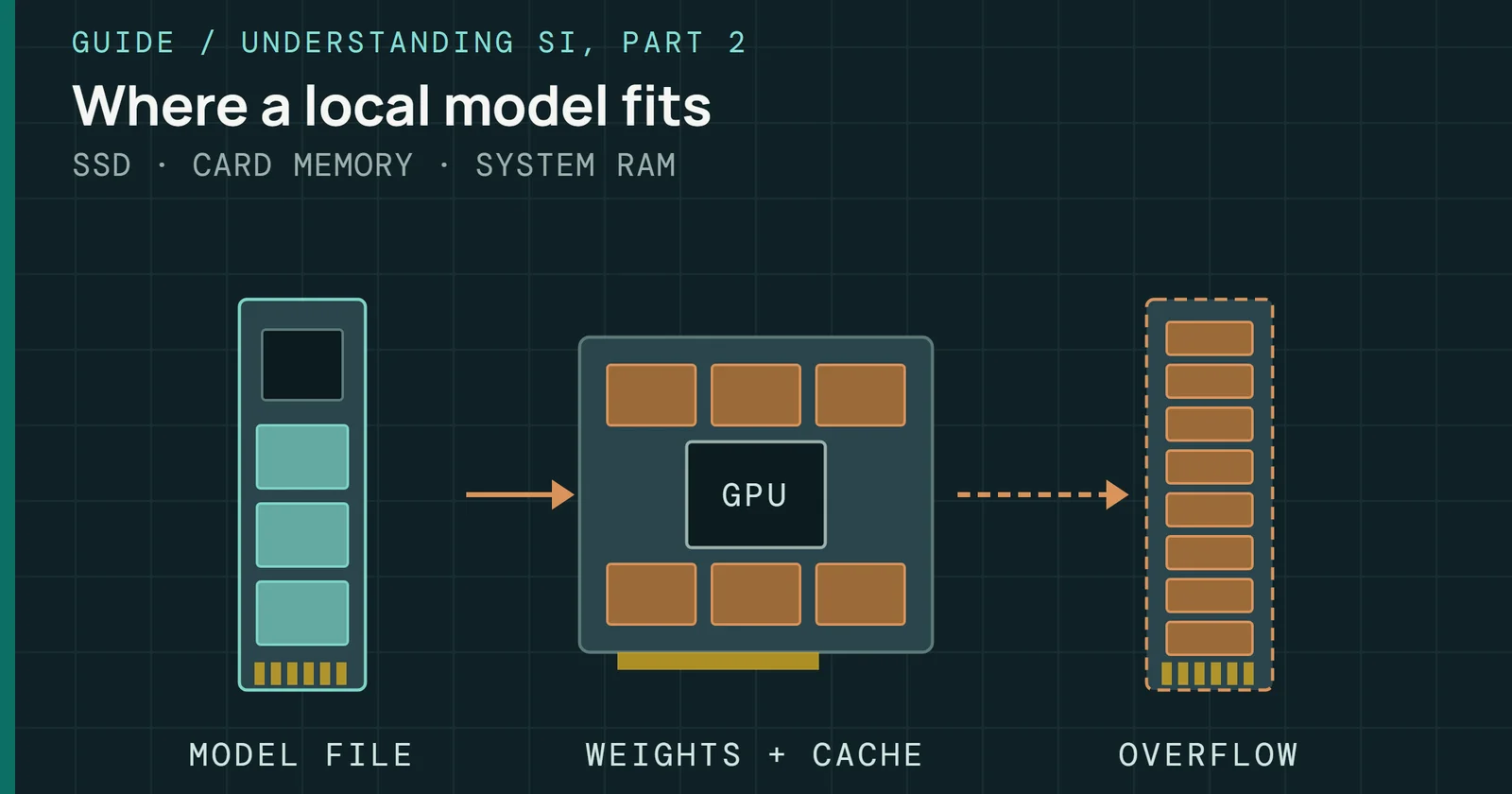
Part 2
How much VRAM, RAM, and disk a local language model needs on Windows, how quantization sets its size, and where Ollama, LM Studio, and WSL keep the files.
Read the guide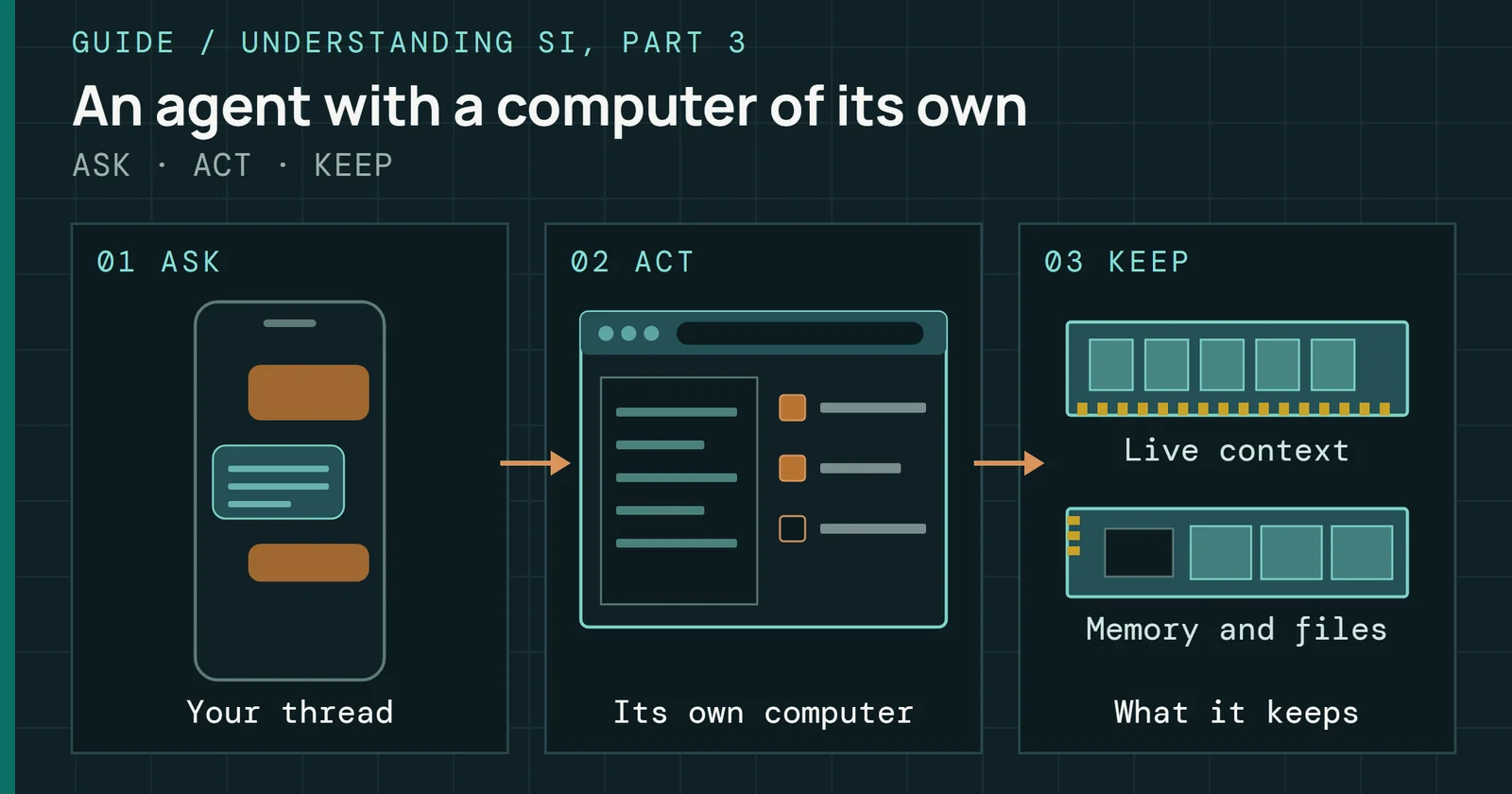
Part 3 · The agents built on one
SI agents, long called AI agents, ranked: Grok Bot, OpenAI Dots, Muse, Tab, Gemini Spark, Claude Duet, Autopilot, local agents, and the storage they need.
Read the guideOn this site
The series on the memory and storage being built for SI, from one cell to the rack.
Where the weights and the cache in these guides sit, from registers to tape.
Why this site writes SI where it once wrote AI, and which names keep AI.
Continue on this site